quarta-feira, 4 de maio de 2011

O Mundo Sensorial


Reação Sensorial Exagerada

           Crianças que tem reações exageradas respondem às mensagens sensoriais com mais intensidade, velocidade e por mais tempo que as crianças cujas reações são adequadas. A reação exagerada pode acontecer com um dos sentidos ou uma combinação de dois ou mais sentidos.

Sinais de alerta
-              A criança parece agressiva ou impulsiva quando incomodada pela estimulação sensorial;
-              A criança fica irritada, manhosa ou de mal humor quando exposta a algumas estimulações sensoriais.
-              Se a criança se incomoda com:
                       texturas peludas ou muito ásperas (roupa de lã, pelo de animal);
                       barro ou chiclete nas mãos;
                       engatinhando ou caminhando descalça numa almofada com objetos ou sobre a grama;
                       sentir migalhas dentro da boca;
                       cortar as unhas ou o cabelo;
                       cheiro de perfume ou produtos de higiene;
                       várias texturas de comida;
                       ouvir barulho de fundo enquanto se concentra;
                       ruído em restaurante, centro comercial ou ginásio;
                       barulhos altos ou inesperados como as sirenes de emergência ou campanhias da escola;
                       brincar com o equipamento do pátio, como os escorregadores ou gangorras;
                       luzes fortes ou a luz do sol;
                       ficar de cabeça para baixo.


 Reação Sensorial Limitada
 Crianças que reagem pouco à estimulação sensorial apresentam pouca resposta a informação que requer a situação, levam mais tempo para reagir e precisam de mais mensagens sensoriais, relativamente intensas ou demoradas, para que tenham uma resposta ou ação.


 Sinais de Alerta
-              A criança não chora quando se machuca gravemente;
-              Não percebe quando alguém lhe toca;
-              Não gosta de fazer novas atividades físicas (jogos físicos);
-              Levou tempo e/ou não parece ter interesse em aprender como se vestir ou comer sozinho;
-              Passa muito tempo sem se dar conta do que acontece à sua volta; não escuta quando chamam seu nome;
-              Passa muito tempo sem perceber as sensações do corpo, como sentir fome, frio ou calor;
-              Não percebe que precisa ir ao banheiro;
-              Não usa suas mãos para fazer alguma atividade sem olhar para elas;
-              Não se dá conta de cheiros fortes;
-              Não percebe quando há comida ou líquido em seus lábios;
-              Se a criança parece
                       passiva, quieta, retraída
                       com dificuldade de se relacionar socialmente
                       facilmente perdida em um mundo de fantasia
                       apática ou facilmente esgotada
                       lenta para responder a comandos ou para terminar tarefas
                       que não deseja se envolver ou explorar as coisas.


Procura Sensorial
Uma criança com desejo de experiências sensoriais que ativamente busca sensações, sendo que de modo socialmente inadequado.


Sinais de alerta
-              Em constante movimento;
-              Gosta de bater, saltar, brincar e jogar agressivamente;
-              Demonstra grande preferência a dar voltas e girar;
-              Constantemente toca objetos e toca ou se aperta contra as pessoas;
-              Corre riscos excessivos em suas brincadeiras, como subir em árvores, pular de lugares altos;
-              Cria situações que parecem perigosas;
-              Aumenta o volume da televisão e do rádio;
-              Procura oportunidades para sentir vibrações, como ficando ao lado de um amplificador;
-              Frequentemente tem fixação visual por determinado objeto;
-              Frequentemente lambe, chupa ou morde coisas não comestíveis;
-              Não consegue permanecer sentado em uma cadeira;
-              Cheira ou prova os objetos enquanto brinca com eles;
-              parece bravo ou explosivo quando é solicitado que fique quieto ou que pare o que está fazendo;
-              É difícil de ser acalmado;
-              É carinhoso fisicamente.

domingo, 1 de maio de 2011

O Mundo Sensorial


Atividades Sensoriais

Vestibular

Calmante                                                                             Estimulante
Movimento lento, rítmico, previsível, repetitivo e linear
Movimento rápido, sem ritmo, não previsível
Exemplos:
Exemplos:
Movendo lentamente no cavalinho
Saltando em um trampolim
Movendo suave e ritmicamente
Movimentos rotatórios e com oscilação

Proprioceptivo

Calmante:
Pressão moderada ou forte sobre uma grande área do corpo

Exemplos:
Atividades de trabalho pesado: empurrando, desencaixando, levantando ou carregando objetos pesados;
Envolver a criança com o próprio corpo ou com uma almofada;
usar material resistente com as mãos, como argila;
Pressionar as articulações dos ombros, do pescoço, da coluna e das ancas;
 Abraçando bichinhos de pelúcia.


Tátil

Calmante                                                                             Estimulante 
Pressionar lenta, previsível e profundamente a pele
Toques imprevisíveis, rápidos e suaves
Exemplos
Exemplos
Massagear lentamente
Carícias suaves
Carícias lentas e num mesmo sentido
Fazer círculos sobre a pele da criança


Visual

Calmante                                                                      Estimulante
Pouca iluminação ou luz natural
Muita iluminação e cores fortes
Cores escuras e tons pastéis
Desenhos contrastantes
Ambientes pequenos, fechados e bem delimitados, sem bagunça
Espaços amplos, sem limites, complicados e desorganizados
Exemplos
Exemplos
Trabalhar em um quarto pequeno
Trabalhar em uma área ensolarada
Brincar em um esconderijo
Muitas fotos e objetos nas paredes
Apresentar materiais com um único estímulo
Muitos materiais e muitos estímulos simultaneamente


Auditivo

Calmante                                                                             Estimulante
Sons baixos e ritmados
Sons altos
Exemplos:
Exemplos:
Musica com batida do coração
Música com batidas fortes
Canções infantis
Canções líricas
Música suave
Barulhos inesperados
Pouco barulho de fundo
Barulho de crianças brincando

Oral:

Calmante                                                                             Estimulante
Sabores doces ou pouco salgados
Sabores ácidos, picantes e amargos
Temperatura morna
Temperaturas quentes e frias
Textura lisa
Superfícies mastigáveis, duras ou irregulares
Chupar, soprar, morder ou mastigar
Mastigar fortemente ou lamber

O mundo Sensorial


Temas para lembrar 

           Os sistemas sensoriais começam a se formar antes do nascimento e continuam em   desenvolvimento durante os primeiros anos da infância;   
           
            Os receptores sensoriais (visual, auditivo, olfativo, gustativo e tátil) recebem informações do ambiente e também dos sistemas internos (propriocepção e vestibular);
           
            As crianças devem participar de atividades (brincar) que lhes deem “input” sensorial para o amadurecimento dos sistemas sensoriais;
           
            O processamento sensorial está relacionado com todos os comportamentos, inclusive os comportamentos difíceis e aos baixos níveis de auto-regulação;
           
            Para ajudar uma criança cujo processamento sensorial se dá de forma diferente, temos que observar primeiro a criança em seu ambiente para determinar quais são suas preferências / necessidades sensoriais;
           
            Cria-se uma dieta de atividades sensoriais para uma criança (baseado em suas preferencias  / necessidades sensoriais) a fim de ajudar-lhe a se auto-regular em seu ambiente de aprendizagem.

segunda-feira, 18 de abril de 2011

Floortime!

The park or a playground is a wonderful place to have Floortime with your child.  These environments provide many opportunities for interaction around a favorite piece of equipment on the playground, like a slide or jungle gym for example, or while taking a walk together through a park, interactions around your child’s interest in flowers, birds, the way bark feels, etc., or just sitting on a bench together chit-chatting about whatever the child is interested in.  The playground environment provides natural opportunities for interaction with peers, facilitated as needed for your child’s individual needs.  Both the park and playground environments can provide a change of pace for you and your child and be refreshing and fun for both.
Floortime at the park or on the playground follows the same principles as you would use in Floortime at home or anywhere else.  It’s important to understand your child’s unique way of understanding his or her world and how he or she takes in and processes information.  The playground is likely to involve a lot of gross motor activity: running, climbing, going on slides. Some children enjoy these motor challenges, other children avoid them. Some children enjoy running but not the slides. other children can stay on the slides forever.  Also, a playground tends to be noisy and busy, with lots of other children talking and playing on the equipment or running around.  This can be overwhelming for some children and they may prefer to stay on the perimeter of the playground for a while or play in the sand.  The park setting tends to be more quiet and calm, which for some children may be just what they need, but for other children might not provide the level of activity or sensory input that they crave.  You can be creative and find ways to engage and draw your child into interaction in these environments by understanding his or her motor and sensory needs and following his or her lead and interests, just like you would at home or in any other setting.
When at the park or playground, keep in mind the following basic Floortime principles:
  • First, understand your child's individual sensory and motor profile. In order for your child to be able to interact with you and/or other children in the playground she needs first to be regulated and interested in the surrounding environment (Stage 1). Carefully observe which sensations, like movement, for example, help your child become calm and regulated and which ones overwhelm her, like loud noises.  What gets your child’s attention and helps her focus?
  • Second, help your child engage with you by following his lead and interests. Just like in the home Floortime sessions, you want to follow your child’s lead and interests and entice him into engaging with you around these interests (stage 2).  Have fun with him as you join him in the activities he wants to do.  For example, if he likes to swing, you can stand in front of him and use gestures and/or sounds, like making different funny faces and sounds that he likes (soft or loud or squeaky or using different pitches) as he comes toward you and then goes away from you on the swing.  While taking a nature walk in the park, your child might show an interest in the texture of the bark on a tree, for example.  You could put your hand between his and the tree and make a little game with him chasing your hand around the tree.  Enjoy the activities that he likes to do and make them meaningful for both of you. Connect with your child's affect; help him to connect with your affect. Are you both enjoying the activity? Is he enjoying being with you?
  • Third, encourage two-way communication. Getting the flow of back and forth communication going while enjoying each other at the playground or park is as important as in your home Floortime sessions (Stage 3).  Because the environments are different and fresh for you and your child, you may find it easier to be creative in encouraging your child to initiate communication and then keep the circles of communication going.  While your child is on the swing, for example, you might encourage her to indicate, with gestures or sounds/words, if she wants to go higher or lower, faster or slower, and challenge her to take the initiative.  In the park, you can get many circles of communication going around the smell of the tree, the texture of the bark, leaves and acorns around the tree, etc. 
  • Fourth, expand your interactions and create situations where you have to solve problems together. Once your child is able to maintain a continuous flow of back and forth interactions, then you can challenge him to move up the developmental ladder to Stage 4. The playground and park are great places to expand your interactions you’re your child and create problem-solving situations where she has to take the initiative.  You can create a game where you and your child have to figure out how to get around obstacles, like having to go around you or between your legs, to get where he wants to go.  In the park, you can go hide behind a favorite tree and encourage your child to come find you or work together to figure out how to get to the other side of the lake.  Gross motor games can be very helpful to entice interactions between you and your child as well as with peers.  Invite a friend to come along on the trip to the playground and bring a ball to throw back and forth, play chase, "hide and seek", "monkey says", sing songs, etc. While your child masters motor and sensory challenges she will also be enjoying the interactions with you and other children.
  • Fifth, encourage imagination and meaningful use of language. As your child progresses up the developmental ladder and begins to use ideas and do some pretend play ( stage 5), parks and playgrounds can offer unlimited opportunities for use of imagination and language.  A jungle gym can become a pirate ship or zoo with different “jungle” animals.  A swing can become a spaceship or a sailing ship gliding through a sea of clouds.  Make sure you follow your child’s lead and interests, letting her set the theme of the play and then become a character in the drama. A peer can be involved in the pretend dramas as well and can offer further opportunities to expand and broaden themes and use of language.  Try to encourage the meaningful use of language—words and gestures—during these times. Pretend play in these different settings may encourage your child to express different emotions (e.g. anger, fear, sadness, joy).
  • Sixth, facilitate logical thinking. If your child is doing very well with Stage 5, you can now challenge him to connect those emotional ideas together in a logical manner (Stage 6).  For the verbal child, these environments offer great opportunities for asking and answering all the W questions, including Why questions.  If your child indicates that he wants to go to the slide, you could ask, “Where is it?  I don’t see it?” or “Why do you want to go to the lake?”  If your child can’t answer Why questions yet, you can give him a choice—good choice first, and a silly choice second so he can’t just repeat the last thing you said.  “Do you want to go to the lake because the ducks are there, or because you want to go to sleep?”  Be creative and help you child broaden and expand his range and flexibility in all different environments and situations.
In summary, the primary goal of Floortime, no matter where it takes place, is to follow your child’s lead and interests while challenging him or her to move up the developmental ladder.  None of the stages on the developmental ladder should be done in isolation from one another.  Taken together, these Floortime stages form a way of engaging with your child, getting a continuous flow back and forth communication where you follow your child’s lead and interests while at the same time challenging her to broaden and expand her range and flexibility, use of ideas and language, and to be logical, all within the context of your child’s unique motor and sensory needs.  And parks and playgrounds offer unique and refreshing opportunities for parent and child to have fun together while strengthening and mastering all these stages. 

Workshop

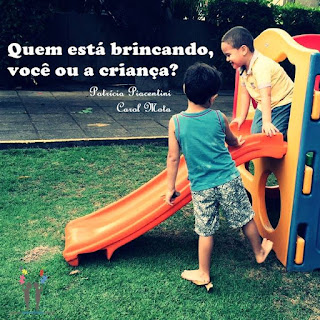
Quem está brincando, você ou a criança?

Quem está brincando, você ou a criança? Os interesses da criança são a chave e é assim que tudo se inicia no Floortime, componente do m...