quinta-feira, 29 de dezembro de 2011

O que eu desejo para 2012 e rever 2011!


Reflexões
                  
Hoje nós temos a oportunidade de redefinir as intervenções que acomodam as crianças com desafios no desenvolvimento.
Estamos numa fase que a acomodação individualizada está sendo necessária para a construção de um ambiente justo.
No entanto, refletindo sobre o passado, vejo que existiam modelos, como o velho método comportamental, que trabalhou por muito tempo as redondezas superficiais do comportamento, aprisionando e limitando várias crianças.
No fundo, talvez tenhamos que agradecer ao que existia. Mas hoje, eu reflito muito sobre os danos causados às crianças que passaram por comandos. Tenho pensado bastante sobre as limitações na linguagem e na construção de iniciativas no trabalho com essas crianças. Tenho repetido a mesma palavra em cada workshop que vou: “INICIAÇÃO, INICIAÇÃO! Deixem que eles iniciem! Esqueçam o comando! Dêem o tempo necessário para a individualização sensorial, deixe a criança processar! O tempo dela não é o seu tempo!”
Ainda divagando sobre o assunto, me chama a atenção outro modelo antigo que persistente aqui no Brasil, são os modelos Cognitivos. Nele a criança é o tempo toda estimulada com jogos educativos, com o intuito de crescer cognitivamente. Aí eu fico pensando: desde quando as relações humanas foram estimuladas por jogos educativos, como o quebra cabeça? O que seria dos modelos cognitivos sem uma mesa, será que existiriam? Será que vemos voluntariedade nessas crianças ao sentar para iniciar essa atividade? Na hipótese do quebra-cabeça favorecer cognitivamente, esse auxilia na construção do vinculo afetivo com o terapeuta? A minha opinião diante disso tudo é que a responsabilidade do terapeuta não é focalizar a construir do cognitivo por si mesmo, mas alcançá-lo desenvolvendo as relações sócio-emocionais.
Agradeço aos desenvolvimentalistas, aos construtivistas e a todos os outros “ïstas” existentes. Como é bom perceber que a mente e o cérebro funcionam de forma individual, respeitando limites sensoriais e relações emocionais.
Como e bom saber a importância desses princípios para a estimulação das habilidades mentais dessas crianças. Por essa razão os seis níveis de desenvolvimento descritos por Dr. Greenspan, no seu livro “The child special Needs”, tem sido a ancora do meu trabalho.
Revendo esses seis níveis, fica bem mais fácil identificar os níveis de desenvolvimento que cada criança possa estar.
1.    Interação com amor e segurança com regulação (respeitando tempo e processamento da criança)
2.    Interação respeitando as relações de engajamento
3.    Interação respeitando círculos de comunicação (deixando a iniciação acontecer)
4.    Interação que buscam soluções de problemas (levando a criança a solucionar os problemas básicos) imitar para ser imitado
5.    Interação que buscam o uso das idéias em um ambiente seguro
6.    Interação que sugerem e tragam pensamento críticos e lógico

O que vejo e quando as interações trocam emoções por menores que sejam o processo deixa de ser a prioridade e ai todos se envolvem no produto da construção daquele ser.
Como profissional e pessoa, eu guardo a esperança que um dia a vida seja mais do que simplesmente seguir comandos. Sinceramente, desejo que os velhos modelos,que julgam cientifico, reflitam sobre a importância das relações sócio-emocionais principalmente dentro do espectro autista.
Se pudéssemos convencer o mundo da importância de poder integrar e modular sentidos para a construção do que somos e agimos, o lado cognitivo e comportamental faria bem mais sentido do que uma equação superficial que trazem os estudos científicos. O que eu vejo, muitas vezes, é que o comportamento hiperativo e agressivo, esconde o desconforto sensorial de muitas dessas crianças. A avaliação cognitiva não tem o mínimo valor quando uma criança se encontra com o emocional em pedaços.
Resumindo, o que vi nesses últimos meses, na minha turnê pelo Brasil, foram crianças esgotadas mentalmente por determinados sons, cores e um universo cheio de atividades e comandos. Vi também, planos cognitivos maravilhosos que necessitariam “apenas” de um excelente plano motor (práxis) para ser sucesso. Vi crianças que estão sendo submetidas a um fracasso diário acadêmico por não serem individualizadas em currículos pedagógicos, devido à falta de Legitimação do que a criança não pode fazer ao que ela não quer fazer.
Assim deixo essa sugestão aos pais e profissionais: antes da elaboração de qualquer plano de ação, faça uso de nosso guarda-chuva do desenvolvimento e avalie a criança na sua individualidade biológica, sensorial, cognitiva e ambiental. E mãos a obra!


terça-feira, 20 de dezembro de 2011

"Autistic Like Me"


Our children are being diagnosed with Autism at an alarming rate ...
 “Autistic Like Me: A Father's Perspective” is a documentary/advocacy film that examines the difficult emotional journey experienced by fathers of autistic children. Having an autistic child turns a parent's world upside down. Dreams are broken and lives are changed forever. Men are especially affected because we often do not seek out the support network needed to deal with this type of emotional upheaval.

With an incident rate of 1 in 110, autism is now the fastest-growing developmental disability in the United States. Experts agree that early intervention is critical for a child's development. But the early days of parenting are also the most stressful. It is a painful time for many who are not prepared for “special” parenthood. Why do men specifically, have such a difficult time coping?

Sharing, compassion, understanding and sound advice are the keys to helping men be good parents and to focus on insuring their children receive the earliest possible professional attention. “Autistic Like Me: A Father's Perspective” is a call to action, an attempt to reach out to all men, regardless of whether they have an autistic child or plan to have a family in the future. By infusing knowledge, education and awareness into our communities, men can gain the voice we are missing. It will empower us to take “care of business” and see that our children get the best help possible.

We are currently in production and anticipate having the film completed by Fall 2011. We are looking for partners to align with, to support our community outreach campaign for this film. If you or someone you know have an interest in partnering with “Autistic Like Me: A Father's Perspective”, please email us at

terça-feira, 29 de novembro de 2011

Tino ja nas bancas!!!!


My Seat Rock


My Seat Rock
Kimberly Gerry Tucker Age 43, Asperger’s Syndrome and Selective Mutism, Seymour, CT
This is my seat rock.” I said to ants who soldiered across my knees. I gave each a flick; aiming for leaf litter and saplings where I knew they’d be okay. (They were resilient creatures with secret societies). But the rock was my real estate. In the castle of the woods, fifth grade was far behind me; with barely a neural pathway reserved to recall erasers, white sweaters with pearlized buttons and laughter like acid rain.
My twelve year old bottom fit inside the natural rock chair, my legs dangling over the rock face; a good ten feet from the forest floor. Above me, I needed only to hoist my self up and I’d be standing atop the big rock where I could stretch out cat-like and peel mica if I chose. Pin-dot red insects mesmerized me as they glided over the rock terrain. The alive speck-dots had adventurous missions to get on with; over the moss stained crannies and sparkly pink quartz deposits.
I adjusted my tailbone into my rock furniture. My legs and arms were limp things separate from me. Maple tree arms swayed overhead. But the wind was invisible; a conductor to lulling leaf choruses, a cracker of dry hollow limbs. Tall trees creaked their limbs together, singing. They leaned to and fro; dancing.
Of course, I could see them ‘playing’ on the cul de sac. Their shouting invaded my music. But I tipped back my head. A granny afghan of ‘trees holding hands’ was my ceiling. Stitches of cloudless blue peeked around silvery bellies of leaves in green of every hue; from pea and celery to emerald. A mosaic of sunlight played kaleidoscopic games. A feeling I couldn’t name rose up, humbling me; almost too much to bear.
I was startled by an inchworm dangling on an almost invisible silk, aiming to make purchase upon my unsuspecting nose. I gently pinched the gossamer lifeline. Leaning foreword, I relocated the wee lime green body to a nearby branch. I wanted to hug it all. My arms raised up,
wincing at the gunshot bursts of laughter, and crack of the bat from ‘the others.’
For a micro-second the off-white planet was impossibly close. Thunk! It smashed the bone below an eye. I couldn’t process what the assault was; even when I saw the dirt- encrusted half-moon seams rebounding off my seat rock. My eyes were full moons. My fingers jabbed the stinging cheekbone for damage.
Then came mounting sounds of invasion. The others were coming! I hoisted up and out of my seat in the boulder’s face- blurs of the others, running the paths, hemming me in. When I hit the earth, my legs crumpled and spilled me three feet down the incline. Richard nearly crashed into me. “It went over here- what the fu- where did you come from?” he said.
I studied the indented place in the crooked pine’s trunk where long ago someone had encircled it with wire. It was now rusted but still clearly visible in places. The resilient tree had grown around it, bulging. Its encroached midsection, like the fat roll on a mid-aged man had been trying to maintain its dignity for all the time since it was crudely defaced. It grew upright proud, though slightly bent, with long graceful pine arms.
Richard pushed past me but my elbow went out and I fell into the crooked pine; and hugged it; thanks for catching me. “Where the frig’s my ball? You better not got it, Mutation,” Richard said to me; adjusting his cap.
With my eyes, I followed the route it must’ve taken; imagined it bumping along my tree-root steps to settle off the path. I noted an off-white contrast of value- change against the siennas of the leaves. I pointed. It was half concealed by moist rotting leaves.
“There it is!” called Jennifer. She was standing on top of my rock! Trodding all over the rarest black mica! I hated
(Continued)
4Continued: My Seat Rock by Kimberly Gerry-Tucker
her denim top trimmed with fluffy pink balls. Her matching denim shorts had more useless balls and put them in a plastic container.
My parents supplied me with all sorts of containers for just such collections. I shrunk into the pine and watched nearly everyone return to the game. Jennifer stayed behind to pick MY mica.
I reached for the squirt bottle that lay bulging in my big pocket. I’d been using it to make my rock change colors. I wanted to nick off the tip of her pert nose with my bottle. Jennifer sprawled out on her belly and commenced to pick long sheets of mica off the rock and put them in her pockets! It was ALL mine to put in my mica vial so I could shake it into sparkling pixie dust. “Hey is anybody in there?” Jennifer said. Waving her fingers in the air broke the dream-state and got me to running.
My mind didn’t differentiate between paths and bushes. It told me to get home via the shortest means. Straight through pricker bushes was that means. Something felt wrong in one of my sneakers. At last; I climbed the chipped concrete steps of my porch with a squishy left foot. I saw Mother’s expression change from one of ‘hello there kid’ to “Jesus H Christ!” I looked down.
A sheet of blood had cascaded down my leg from a five inch gash in my thigh and pooled in my shoe wetly. I was ushered past the rosy-cheeked paper Santa that was too jolly for my mother to take down from the living room wall. Things like that made her happy. Like the red garland still draped over the parakeet cage and the plastic Rudolph on the cellar door. She would probably make me take a bath. I just wanted to be with my pencil shaving collection. My rocks, my erasers...
THE END

domingo, 23 de outubro de 2011

Relationship-Focused Early Intervention With Children With Pervasive Developmental Disorders and Other Disabilities: A Comparative Study


GERALD MAHONEY, PH.D. FRIDA PERALES, M.Ed. Case Western Reserve University, Mandel School of Applied Social Sciences, Cleveland, Ohio
ABSTRACT. This study compares the effects of relationship-focused early intervention on toddlers and preschool-age children who were classified as having either pervasive developmental disorders (PDDs) (N = 20) or developmental disabilities (DDs) (N = 30). The intervention was conducted over a 1-year period through weekly individual parent-child sessions. It focused on helping parents use responsive teaching strategies to encourage their children to acquire and use pivotal developmental behaviors that addressed their individualized developmental needs. Before and after comparisons indicated significant increases in parents’ responsiveness and children’s pivotal behavior. Both groups of children made significant improve- ments in their cognitive, communication, and socioemotional functioning. However, children with PDDs made statistically greater improvements on the developmental measures than children with DDs. On several de- velopmental measures, children’s improvements were related to increases in both their parents’ respon- siveness and their own pivotal behavior. J Dev Behav Pediatr 26:77–85, 2005. Index terms: early intervention, pervasive developmental disorders, relationship focused intervention.

NEW EVIDENCE FOR THE DIRFLOORTIME MODEL
We are pleased to share with you three new studies that bring more evidence of how effectively, and culturally appropriate, the DIRFloortime can help children and families around the world:
To read more about research supporting the DIRFloortime model, click here

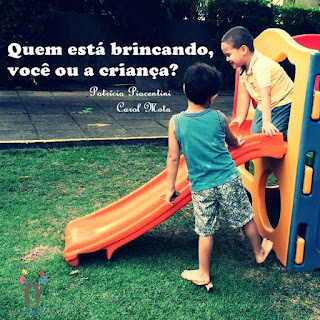
Quem está brincando, você ou a criança?

Quem está brincando, você ou a criança? Os interesses da criança são a chave e é assim que tudo se inicia no Floortime, componente do m...